
HUNGER STRIKES
28 Aralık 2025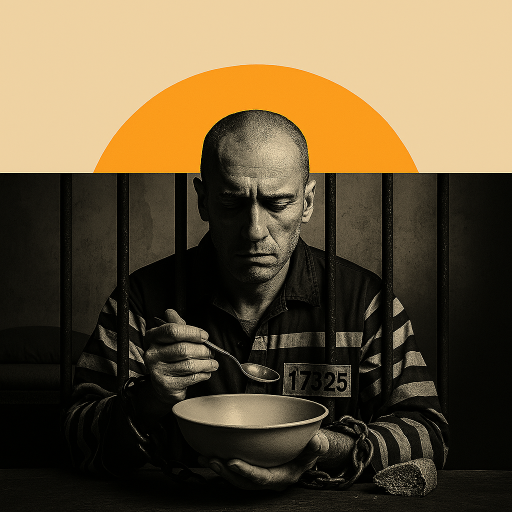
Dilara Durmaz
How much say do people have over their own bodies? Do prisoners have less say? The modern criminal justice system aims to serve the public interest by restricting the basic rights and freedoms of prisoners. When these freedoms are restricted, it can mean that you can’t eat what you want, or that you must eat when you don’t want to. In this regard, hunger strikes are an action that will create a strong dilemma between the responsibilities of doctors and the principles of physical immunity of prisoners. While the World Medical Association clearly emphasizes that the individual’s consent to medical intervention should be considered, the European Court of Human Rights has stated in its case law that force-feeding may constitute torture or inhuman treatment (WMA, 2017; ECtHR, 2005). Today, although the conditions of penal execution have improved and prisoners live in more humane conditions, they still have their own health conditions that they cannot claim or interfere with, and these must be protected by doctors and guards. Hunger strikes are unlikely to successfully achieve their controversial aims because prison staff are placed in a difficult position where they are unable to fulfil their duties and responsibilities, according to Candice Delmas, a research assistant philosopher and policy researcher (Delmas, 2018). In this research paper, the justifications against the force-feeding of prisoners will be examined within the framework of human rights, ethical principles and medical responsibilities of physicians; especially the duties of physicians and the state in the face of the concepts of consent, individual autonomy and human dignity and the legitimacy of the practice of force-feeding will be questioned (Delmas, 2023). This paper explains that state intervention in hunger strikes is deemed legitimate for the protection of the right to life, a fundamental right which may override individual autonomy in certain circumstances.
It is not surprising that life is a right, but this right is not ordinary, but absolute and inalienable. This means that even the right holder cannot dispose of, transfer or waive these rights. And another fact that is not surprising is that the right to life is inviolable. Its characteristic is that no one can limit this right. According to Article 2.1 of the European Convention on Human Rights, “everyone’s right to life is protected by law”. The fact that prisoners endanger their lives by starving themselves is an interference with the right to life, which is not protected by law for the reasons mentioned (European Convention on Human Rights, 1950, art. 2.1). In addition, the right to life is a public value. By starving themselves and thus endangering their own lives, the individual aims to wound the public conscience. However, the authorities are also obliged to protect the public value and dignity that is a characteristic of the right to life. The right to life, which is stated in Article 3 of the Universal Declaration of Human Rights, “everyone has the right to live in freedom and security”, is the duty of the authorities. Therefore, in order to achieve this goal, intervention in hunger strikes becomes legitimate so that a right that concerns the public conscience and the individual himself or herself can be protected.
There is a reason why it is legal for doctors to intervene in hunger strikes, not ordinary people. The intervention of doctors, that is, force-feeding, is not a humiliating act or a type of torture, but a treatment method, unlike ordinary people. According to the articles listed in the World Medical Association Tokyo Declaration, doctors have medical ethics and the obligation to show due care (World Medical Association, 1975). Medical ethics aims to reverse harm, and this is the main motivation behind the emergence of ethical rules. Since the hunger striker has the intention to harm himself, eliminating the life risk that results from this aim is also a kind of reversing the harm. According to the United Nations Medical Ethics Principles, all healthcare professionals have the authority to make decisions on behalf of the patient when necessary (United Nations, 1982). Since the hunger striker will not be able to think clearly after a while due to lack of food, the doctors who are the guardians of his life will make the best decision for him. In addition, hunger strikes are a state of extremes and in extreme cases, the medical procedures applied can be extremely strict. The harsh intervention of doctors is again necessary for the well-being of the patient, even if the patient does not want it, the doctor is authorized and responsible for it.
In addition to all these reasons, there are many different views. These different views are mostly concentrated on one point: the right to protest. According to the common point of these opposing views, hunger strike is a form of passive protest. This right to protest is stated in Article 10 of the European Declaration of Human Rights as follows: “Everyone has the right to freedom of expression. This right includes the freedom to hold opinions and to receive and impart information and ideas without interference from public authorities and regardless of frontiers.” This means that hunger strike is included in protests and is legally protected in a different way. The law’s desire to protect this action specifically is to strengthen and protect the principle of freedom of thought. It is natural for people to use their right to protest as they wish, this can manifest itself through a hunger strike or another type of strike. In addition, this type of passive resistance does not involve direct violence, therefore it does not end with violence as protests are usually stopped or prevented. However, its similarity to other protests is the prisoner’s ability to insist on his/her demands and the motivation to have them accepted, this inner drive emerges as the reason for every protest. In this case, force-feeding is understood by doctors as an intervention in protests and freedom of thought and is interpreted in this way. Because force-feeding someone who expresses himself by starving himself is turning the tables and silencing the protester. Silencing a protester’s voice, suppressing the expression of an idea is a situation that should not exist in today’s developed societies, especially if this situation is done by our professional and educated doctors. Based on these reasons, there are views that argue that force-feeding is not legitimate.
Despite the right to protest, each protest has its own etiquette. The way each protest is conducted is unique and the specific paths to be followed have been decided in advance. Therefore, each protest begins with a limitation and continues within these limitations. This is the line determined by law and social rules. These limitations and the rules on how to protest are indispensable for the public good. Public order is a whole, such a whole that even the slightest indiscretion disturbs everyone in this system, even if they are not personally affected, and protests cannot violate this. A prisoner on hunger strike, by starving himself, endangers the prison order and the authority of the prison administration, puts an extra burden on the health system and damages the dignity and reliability of the system. Prison sovereignty is a non-negotiable condition because the state is an inseparable part of the order and therefore is not open to intervention. A hunger striker violates public order during a strike because it disrupts public peace, prevents authorities from performing their duties, endangers security, and although it is an individual and passive form of protest, its effects can be widely reflected, which is where freedom of expression is limited in all national and international systems. Intervention in these protests, namely force-feeding by doctors, is necessary for state order.
As we know, the indispensable part of the modern world is state structures. States now have positive obligations, that is, instead of being passive for their citizens under the rule of an authority, they have to show involvement and take action when necessary. Within the scope of the state’s positive state obligation, the lives of individuals must be protected, and human rights must be prevented from being violated, in a sense, the state was created for this. And the state is such a big system that it has been formed with the contributions of all people, even those who have died or will be born. For this reason, the state represents a common mind, it is wiser than individuals. If the idea that the right to life should be protected exists, even if individuals do not want it, or even if the owner of this right gives up with his own consent, the state will still protect it if it deems it appropriate to protect it. Doctors, who are a part of the system and an official of the state, should not continue to force-feed for this order and should not feel guilty about it.
In light of all these listed reasons, theoretical examples and definitions, and legal bases, we conclude that force-feeding a prisoner on hunger strike is legitimate and necessary in the context of medical principles and international ethical rules. Since hunger strike is a right to protest, protests should be protected and even encouraged to a certain extent, but since this method of protest violates individuals’ rights such as the right to life and freedom of expression, it becomes open to intervention. The conditions for this intervention and how it will be done have slowly begun to take shape in many legal systems. In fact, in some systems, this issue has not even been subject to legal regulation yet. In order for this issue to be brought to the agenda, first of all, everyone must agree with peace of mind that interventions are necessary and legal. Conducting research on this issue will facilitate this and perhaps be a step towards this.
REFERENCES
Bendtsen, K. (2019). On the force-feeding of prisoners on hunger strike. HEC Forum, 31(1), 29–48. https://doi.org/10.1007/s10730-018-9365-4
Council of Europe. (1950). European Convention on Human Rights. https://www.echr.coe.int
Delmas, C. (2023). The right to hunger strike. American Political Science Review, 22(4). https://doi.org/10.1017/S0003055423000400
FIFTH SECTION. Case of Yakovlyev v. Ukraine, No. 11882/20, European Court of Human Rights. (n.d.). https://hudoc.echr.coe.int/eng?i=001-221265
United Nations. (1948). Universal Declaration of Human Rights. https://www.un.org/en/about-us/universal-declaration-of-human-rights
World Medical Association. (2006). WMA Declaration of Tokyo: Guidelines for physicians concerning torture and other cruel, inhuman or degrading treatment or punishment in relation to detention and imprisonment (Original work published 1975). https://www.wma.net/policies-post/wma-declaration-of-tokyo-guidelines-for-physicians-concerning-torture-and-other-cruel-inhuman-or-degrading-treatment-or-punishment-in-relation-to-detention-and-imprisonment/