
THE INFLUENCE OF TOLSTOY’S PSYCHOLOGICAL STATE
25 Aralık 2025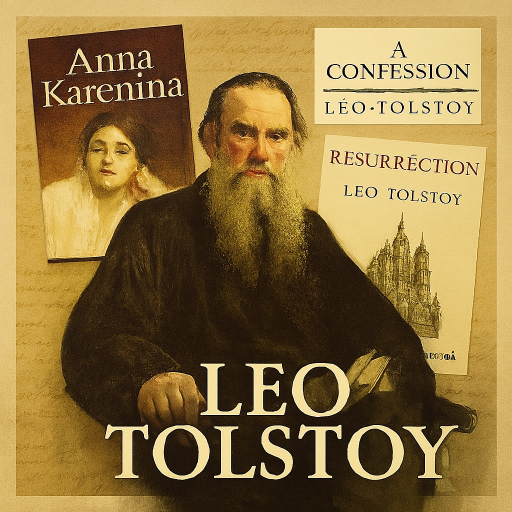
Ceren Uymur
Edebi eserler yazıldıkları dönemin tinsel ve düşünsel boyutlarda sahip olduğu koşullarını yansıtan bir üretim sürecinin ürünleridir. Tanzimat dönemiyle birlikte modernleşme hareketlerinin oluşmaya başlaması yeni bir edebi anlayışın izlerini eserlere taşımaktadır. Cumhuriyetin ilanına kadar sosyal ve siyasi alanda yaşanan her bir değişim hukuki süreçlerde farklılaşmalara sebep olsa da toplumsal yaşamdaki sekülerleşme temelli hareketler daha özgür bir düşünce ortamının tahsis edilmesiyle birlikte ancak açığa çıkabilmektedir. Bunun esas sebebi var olan devlet söyleminin edebi eserler üzerindeki etkileyici ve yaptırımcı gücüdür. Modernleşme kavramını işleyen yazarlar kadınların toplum içerisinde sahip olduğu konumun ve buna ek olarak toplumsal cinsiyet rollerine yüklenen sorumlulukların mevcut siyasi süreçlerdeki dönüşümüyle birlikte yaşadığı değişim retoriğini yansıtmaktadır. Ana akım edebiyatının tarihsel bağlamı içinde değerlendirilen Peyami Safa’nın Fatih-Harbiye adlı romanında doğu-batı çatışmasının toplumsal statükoyu bozucu figürleri biçimlendiren örneklere rastlanmaktadır.
Introduction
Authors do not only tell stories, but they also reflect their inner world into their writing (Aras, 2015). The connection between the authors’ psychological states and their literary works is indisputable, especially when it is seen through the theme of the book and the characters’ decisions. One of the authors who had poured out their heart into their works is Leo Tolstoy. He dealt with many mental struggles; however, he never avoided illustrating his life in his works (Moulin, 2023). He starts his novel Anna Karenina with world-famous line, “All happy families are alike; each unhappy family is unhappy in its own way.” (Tolstoy, 2012, p.3). In this opening, Tolstoy signals that in addition to romantic tragedy, the book contains emotional breakdowns and reflections of his own life. He was born into an aristocratic family, but he had lost both of his parents and two of his brothers. (Tolstoy, 2005). In a life which he was so familiar with death, he was alienated from his family and society. He participated in the Crimean War which changed his manners, and he embraced a nonviolent ideology, later in his life. (Frank, 2023). During war years, he also realized the inequalities between the rich and the poor people. The awareness about life led him to search for meaning which was the key of his spiritual journey. This research aims to discuss how Tolstoy’s psychological state is reflected in his literary works under the titles of analysis and experiences of marriage and family, social inequality and the spiritual journey; as it is seen in Anna Karenina, Resurrection and A Confession.
The Reflection of Tolstoy’s Marriage in Anna Karenina
Tolstoy’s marriage experiences influenced the way he portrayed the marriage and family life in his literary works. Tolstoy got married to Sofia Andreyevna one month after they met. The couple had sixteen years age gap, and their marriage lasted almost fifty years. Although they were both raised in aristocratic families, they had different perspectives about life. Their relationship was built on passion, obsession, and emotional disconnection (McLean, 2011). In their first years, everything was perfect; Tolstoy was affectionate to his wife, and she was writing the copies of Tolstoy’s one of the most famous works, War and Peace, to show gratitude for his love (McLean, 2011). Tolstoy was experienced about life, but Sofia had the passion of the youth. “It is true, I cannot find anything to occupy me. He is fortunate because he is talented and clever. I am neither. One cannot live by love alone, but I am too stupid to do anything but sit and think about him.” (Tolstoya, 1862, p.6) In this diary entry, Sofia reflects her feelings about Tolstoy, she adores his talent and mind. She feels bored and useless, for this reason, she helps him to copy his works. However, this happiness did not last long because Tolstoy struggled with depression while he was writing Anna Karenina and he distanced himself from Sofia to overcome his mental struggles. The change in their relationship dynamics were mirrored by Anna and Vronsky’s relationship in Anna Karenina.
Anna and Vronsky had a passionate relationship from the beginning until Vronsky started to lose his feelings for Anna, just like Tolstoy. In early stages of their relationship, when they hide their love affair from everyone, Anna writes a note to Vronsky, “I am ill and unhappy. I cannot go out, neither can I go any longer without seeing you. Come this evening; Alexis Alexandrovich is going to the Council and remain there till ten.” (Tolstoy, 2012, p.350). It can be seen how Anna is turned into a woman who is shaped by Vronsky’s presence, reflecting dependency and obsession rather than pure love. Also, she is ready to risk her dignity by arranging a secret meeting, even though she cares a lot about her prestige. When their relationship was heard by everyone, Anna realized the base of their love, the passion, was faded away and there was no solution. “What I want is love and it is lacking. Therefore, all is finished!” (Tolstoy, 2012, p.731). Anna claims that relationship is over because Vronsky is not affectionate enough towards her. This situation is quite similar to Tolstoy and Sofia because both couple lack of communication and it leads to alienation between partners. (Castillo, 2007). In the last stages, Anna feels hopeless, and she is surrounded by suicidal thoughts as it is reflected in, “I shall die, and I am very glad that I shall die: I shall find deliverance and deliver you.” (Tolstoy, 2012, p.355). Although Anna is essentially a reflection of Sofia, Tolstoy expresses his own suicidal desires through Anna in this line. Briefly, Tolstoy has narrated the dynamics of their marriage through Anna and Vronsky.
The Reflection of Tolstoy’s Criticism of Social Inequality in Resurrection
Tolstoy illustrated his criticisms of social inequality of Russian society through his literary works and personal life choices. The class system in the Russia of nineteenth century provided some privilages to the upper class, such as land ownership and political power. On the other hand, labour of the peasants, who have to obey their landowners, was being exploited and caused poverty within the class. However, with the Emancipation Reform of 1861, serfdom was abolished, and agriculture was modernized. Despite the economic growth, the inequality between classes has increased and lay a foundation for future revolutions (Rakhimova, 2024). In a time when lower class was struggling to provide for their family, Tolstoy could not help to feel discomfort by this situation. He offered serfs to give some free land in order to make their conditions better, even though they did not accept (Fuller, 2009). Then, Tolstoy became the administer of his province to help the serfs by developing fair policies for them. He also educated people as he mentions in Confession, “I returned to Russia armed with all the wisdom; and having become the Arbiter, I began to teach, both the uneducated peasants in schools and the educated classes through a magazine I published.” (Tolstoy, 2005, p.11) He called himself ‘Arbiter’ which means the person who keeps peace between the peasants and owners. It appears that he served as a bridge in order to reduce inequality. Besides this, he drew attention to injustice by narrating the Russian society and his criticisms in Resurrection.
One of his most critical works about Russian society was “Resurrection”, which narrates a man named Nekhlyudov, who serves on a jury, and a poor woman who is convicted, even though she was innocent. This judgement excited the Nekhlyudov’s realization of the unfair world around himself. However, it actually reflects the Tolstoy’s own awakening and criticisms, as it is shown in the line, “How comfortable they all are, as compared not only with the prisoners, but even with the peasants!” (Tolstoy, 1900, p.335). This quote is the obvious example of the anger against social injustice, which also was the first step of Nekhlyudov’s moral journey. His moral improvement mirrors Tolstoy’s own awareness and criticisms of the inequality between classes. Nekhlyudov’s change of mindset is clear in this line, “He thought of Maslova, of the decision of the Senate, of his resolve to follow her in any case, of his having given up the land.” (Tolstoy, 1900, p. 364). This is the result of the awakening process, Nekhlyudov gives up on his properties, which refers to Tolstoy’s renunciation of his wealth. In conclusion, “Resurrection” is a representation of Tolstoy’s own process of realization of the social inequality in his country and taking action against it under the name of “Arbiter”.
The Reflection of Tolstoy’s Spiritual Journey in A Confession
Tolstoy was an author who dealt with various mental struggles throughout his life, and he expressed these complex issues, both explicitly and implicitly, in his literary works. He wrote A Confession to show his spiritual journey and how he found salvation by his faith. He was a perfectionist since youth because he wanted to be praised and to be more famous. He had succeeded what he desired and became one of the most famous writers of Russia after he published War and Peace and Anna Karenina. Also, he was a wealthy man, and he had a happy marriage in those times. Despite all these beautiful things, he had severe depression, fear of death and suicidal desires as he turned the age of fifty (Bost, 2012). Although he had always some questions about life, he chose to ignore them because he had everything he wanted. However, this defence mechanism did not last long.
As he tasted fame, the questions of “What’s it for?” began to appear in his head as he explains, “The questions, however, began to repeat themselves frequently, and more and more insistently to demand replies, and like drops of ink always falling on one place, they ran together into one black blot.” (Tolstoy, 2005, p13). These black blots in his mind caused him to search for answers which made him doubt his life and he mentions, “I felt that what I had been standing on had collapsed, and that I had nothing left under my feet.” (Tolstoy, 2005, p.14). This emptiness led to fear of death and all he could think was dying. Although he was scared of death, at one point he became so hopeless that he began to have suicidal thoughts. “The horror of darkness was too great, and I wished to free myself from it as quickly as possible by noose or bullet.” (Tolstoy, 2005, p.20). The suicidal desire in this line, as mentioned, was also narrated in Anna Karenina. After all this search for meaning, Tolstoy understood that the rational thoughts he always trusted did not provide any answers about life. Then he realized that the only answer was faith. “I could not but admit that it alone gives mankind a reply to the questions of life, and that consequently, it makes life possible.” (Tolstoy, 2005, p.46). This quote remarks the turning point in his life which is finding faith in God. This mental and spiritual journey was a milestone in Tolstoy’s life and even though he was suffered in this journey, he managed to recover from his problems by expressing his thoughts through literature.
CONCLUSION
In conclusion an author’s psychological state and their literary works is inseparable. Tolstoy was one of the greatest examples of writers who had succeeded reflecting their life, ideas and inner world in their works. His socio-economic situation and family life gave him many experiences and provided both chaos and emotional shelter, as reflected in Anna Karenina. Also, the country he lived shaped his character, helped him to express his feelings and thoughts in the remarkable way. The best example of this statement is Resurrection, which is the most critical books of him criticising the Russian society. His awareness about the world and life caused him to have some mental health problems such as depression and existential crisis. Although he struggled with these problems for many years, he was able to recover from them by discovering and holding on to faith as he captured this spiritual journey in his book, A Confession. Tolstoy created timeless and unforgettable works of art by adding a piece of himself to each of his works. His reflective works might open the door for future research on how literature can be used as a coping mechanism and how it can serve as a therapy for writers who suffers from mental health problems.
REFERENCE LIST
Aras, G. (2015). Personality and Individual Differences: Literature in Psychology- Psychology in Literature. Procedia – Social and Behavioral Sciences, 185, 250–257. https://doi.org/10.1016/j.sbspro.2015.03.452
Bost, I. (2012). North Carolina insight. https://nccppr.org/wp-content/uploads/2017/02/one_mans_journey_out_of_depression.pdf
Castillo, K. (2007). Passion and marriage in Anna Karenina. Agora, 16(2007), 3. https://digitalshowcase.lynchburg.edu/agora/vol16/iss2007/3/
Fuller, J. R. (2009). Leo Tolstoy and social justice. Contemporary Justice Review, 12(3), 321–330. https://doi.org/10.1080/10282580903105871
Frank, M. K. (2023). Leo Tolstoy. Salem Press Biographical Encyclopedia. https://icproxy.khas.edu.tr:5347/c/p2wuxd/viewer/html/aflyqnrzvj
McLean, H. (2011). The Tolstoy Marriage Revisited—Many Times. Canadian Slavonic Papers, 53(1), 65–79. https://doi.org/10.1080/00085006.2011.11092666
Moulin, D. (2023). How much moral psychology does anyone need? Tolstoy’s examples of character development and their impact on readers. Educational Theory, 73(5), 710–727. https://doi.org/10.1111/edth.12604
Rakhimova, I. (2024, September 5). Social and economic life of the Russian Empire in the 19th century. https://www.nextscientists.com/index.php/science-conf/article/view/324/313
Tolstoy, L. (2005). A Confession (Dover edition, A. Maude, Trans.). Mineola, NY: Dover Publications.
Tolstoy, L. (2012). Anna Karenina (First Vintage Classics edition, L. Maude & A. Maude, Trans.). New York: Vintage Classics.
Tolstoy, L. (1900). Resurrection (L. Maude, Çev.). London: Francis Riddell Henderson.
Tolstaya, S. (2021). The diaries of Sophia Tolstoy (Extract). Alma Books. https://almabooks.com/wp-content/uploads/2021/02/DiariesSophiaTolstoyExtract.pdf